
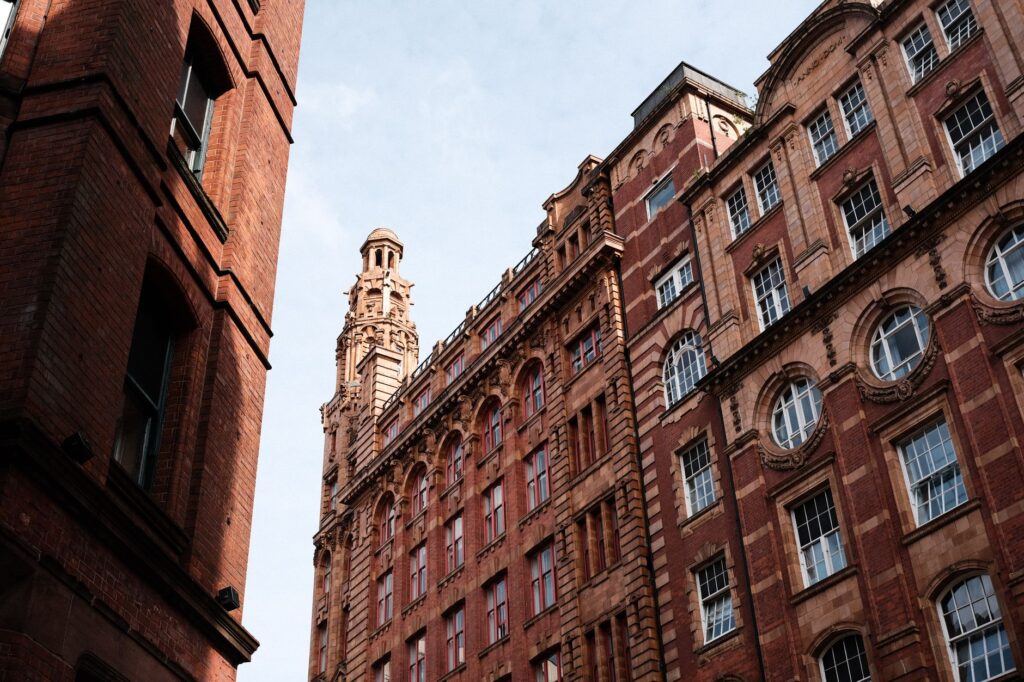
In 1917, working in a laboratory on Bridge Street, Ernest Rutherford became the first person to deliberately split the atom. By bombarding nitrogen gas with alpha particles, he knocked protons loose and demonstrated that the atomic nucleus could be broken apart. The experiment was quiet, almost domestic in scale, yet it opened the door to nuclear physics as we now understand it. That moment was not an isolated flash of genius but part of a longer pattern that has run through this city’s scientific life.
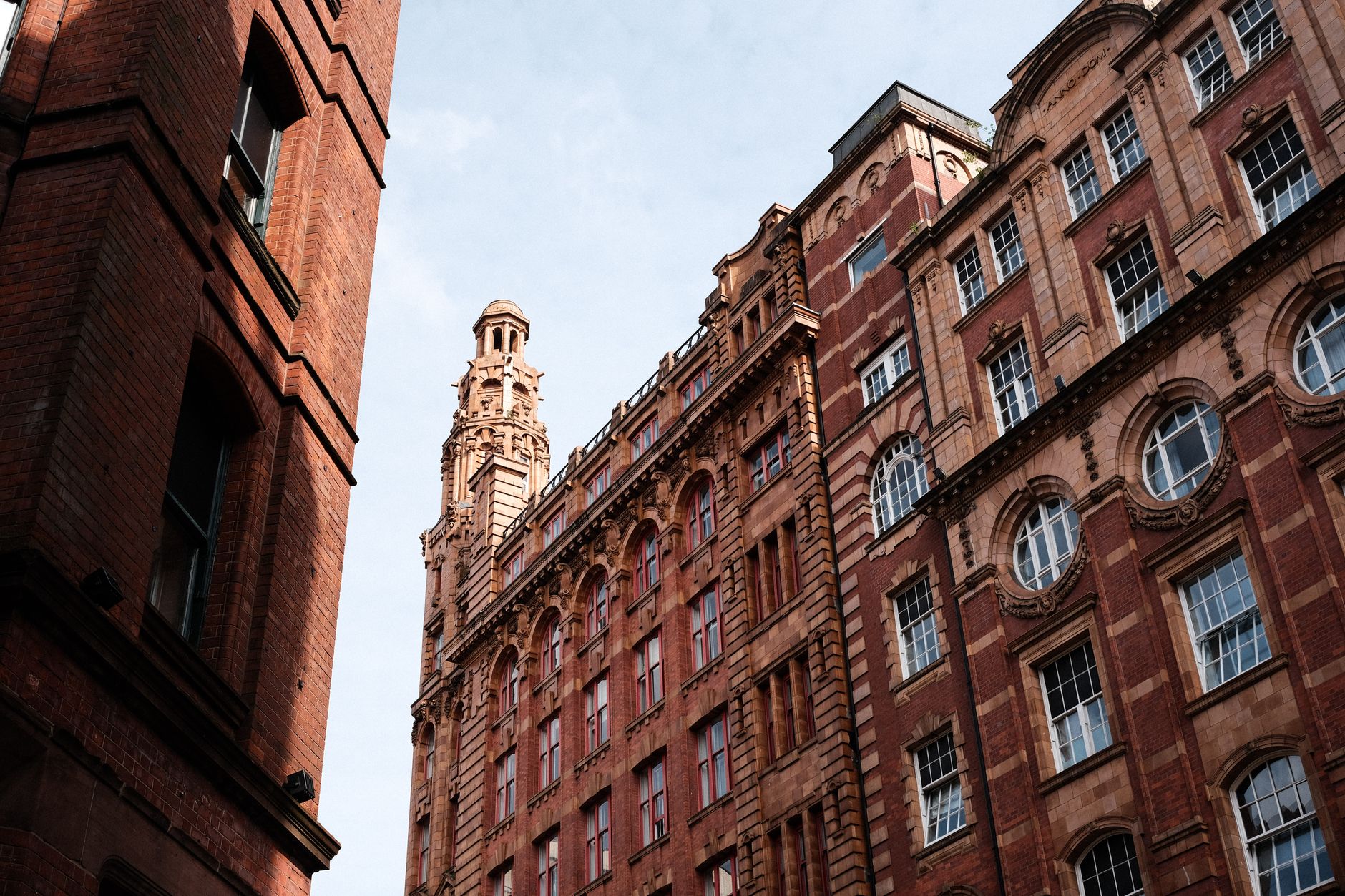
Splitting The Atom
Rutherford led the physics department at the university from 1907 to 1919, and the work he oversaw there reshaped the field. His earlier research with Hans Geiger and Ernest Marsden produced the famous gold foil experiment, which revealed that atoms are mostly empty space with a dense, positively charged nucleus at their centre. This overturned the prevailing model and gave physicists a workable picture of atomic structure.
The 1917 nuclear reaction went further still. Splitting nitrogen into oxygen and hydrogen proved that one element could be transformed into another through nuclear processes, an idea that had belonged to alchemy a generation earlier. The techniques and instruments developed in these years laid the groundwork for later advances in nuclear energy and particle physics, and they trained a generation of researchers who carried the discipline forward across Britain and beyond.
Computing First Steps
Decades later, the same institution became the birthplace of modern computing. On 21 June 1948, a machine nicknamed the Baby ran the world’s first stored program. Built by Frederic Williams, Tom Kilburn and Geoff Tootill, it demonstrated that both instructions and data could be held in electronic memory and executed automatically. It was a rudimentary device by any later standard, but the principle it proved underpins every computer in use today.
This early work drew talented minds to the city, including Alan Turing, whose theoretical contributions gave computing its intellectual foundation and who worked at the university in the years after the war. The concentration of engineering skill, mathematical talent and industrial heritage made Manchester a natural place for such experiments to take root. From that foundation grew a series of increasingly capable machines, and the region held a leading position in computer development through the 1950s and into the following decade.
Graphene And Beyond
The tradition of discovery did not fade with the twentieth century. In 2004, Andre Geim and Konstantin Novoselov isolated graphene, a sheet of carbon just one atom thick. Their method was disarmingly simple: they used adhesive tape to peel ever thinner layers from a block of graphite until they were left with a single atomic layer. The material they produced turned out to be extraordinarily strong, highly conductive and remarkably flexible.
The achievement earned the pair the Nobel Prize in Physics in 2010, and it prompted a wave of research into two-dimensional materials that continues today. The city responded by building the National Graphene Institute and, later, a dedicated engineering centre, drawing scientists and companies interested in turning laboratory findings into practical products. Potential applications range from lightweight composites and improved batteries to filtration membranes and next-generation electronics.
What links these three milestones is not luck but a durable culture of experiment. A city built on manufacturing valued people who could make things work, and its universities gave researchers the freedom to test bold ideas. Splitting the atom, running the first stored program and isolating graphene each began as a curiosity pursued with limited equipment and considerable patience.
If you want to see where this history sits, visit the Science and Industry Museum in the city centre, where the story of these breakthroughs is laid out alongside the machines and instruments that made them possible.